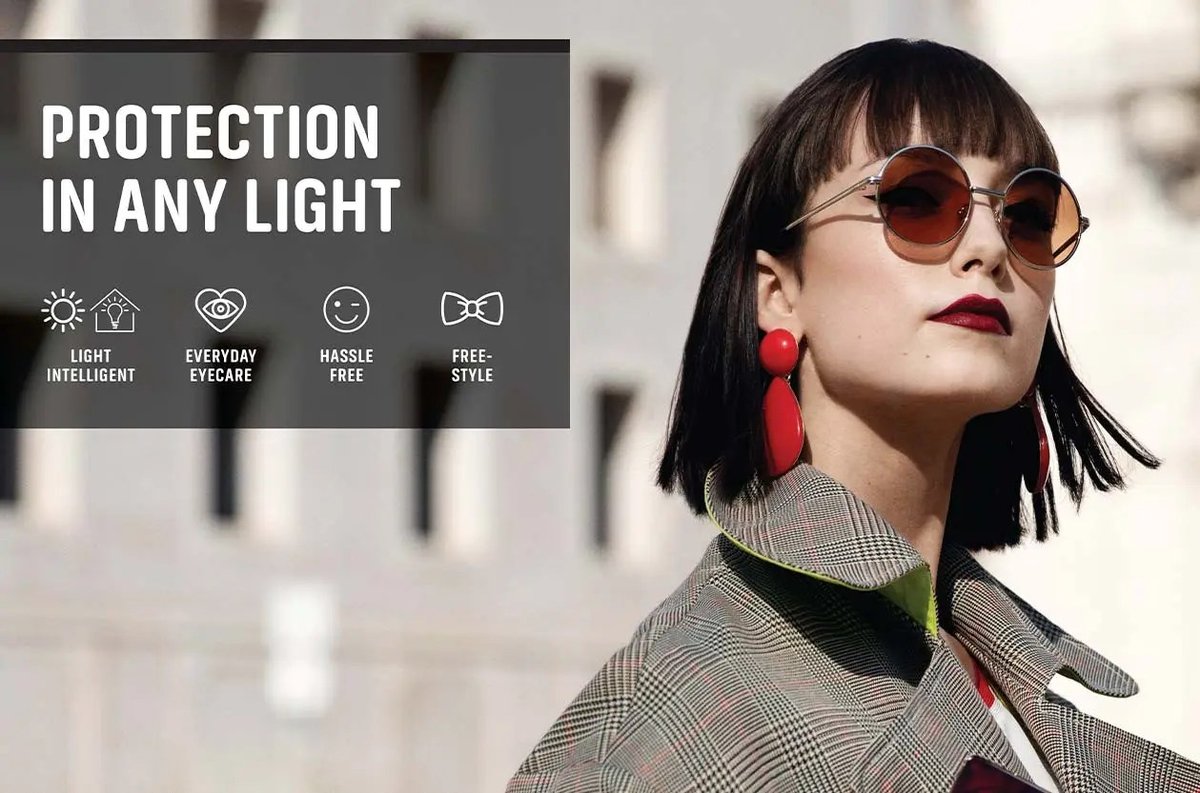
Imagine a world where your eyeglasses adapt to every lighting condition, seamlessly shifting from clear indoors to fully tinted sunglasses the moment you step outside. No more fumbling for your sunglasses, no more squinting, no more juggling multiple pairs of eyewear. Sounds like a dream, right? Welcome to the reality of transition lenses (also known as photochromic lenses). But while they offer undeniable convenience, these clever chameleons of the optical world aren't a one-size-fits-all solution.
So, who should consider transition lenses, and who might be better off sticking to traditional glasses and sunglasses? Let's dive deep into the world of light-adaptive eyewear.
At a Glance: Transition Lenses
- What they are: Lenses that automatically darken in UV light and clear up indoors.
- How they work: Special molecules react to UV rays, changing shape to absorb light.
- Key benefits: Convenience, continuous UV/blue light protection, reduced eye strain, cost-effective.
- Best for: Active outdoor lifestyles, light-sensitive individuals, digital device users, children.
- Considerations: May not activate fully in cars (traditional types), slight residual indoor tint, adjustment time in extreme temperatures.
- The bottom line: A versatile solution for many, but specific lifestyles (e.g., frequent drivers) may need specialized options.
The Magic Behind the Lens: How Transition Lenses Work
Before we decide if they're right for you, let's pull back the curtain on how these ingenious lenses operate. Transition lenses, or photochromic lenses, contain billions of photochromic molecules embedded within the lens material. Think of them as tiny, miniature light sensors.
Here's the quick science:
- Exposure to UV Light: When these molecules are exposed to ultraviolet (UV) light—the same light that causes sunburns—they undergo a rapid chemical reaction. They change their structure and expand, creating a tint that absorbs visible light, making your lenses darker. The stronger the UV, the darker they get.
- Moving Indoors (Reduced UV): As UV light diminishes (when you go indoors or enter shade), the molecules revert to their original shape, causing the tint to fade and the lenses to become clear again.
- Speed and Sensitivity: Modern transition lenses are incredibly fast. They typically darken within seconds of UV exposure and clear up significantly within a few minutes indoors. Advanced versions are also designed to react to visible blue light from digital screens and LED lighting, offering an extra layer of protection and comfort.
This seamless, automatic adjustment is what makes them so appealing, essentially giving you prescription glasses and sunglasses rolled into one convenient package.
The Case For Transition Lenses: Who Benefits Most?
For many, transition lenses are a game-changer, offering unparalleled comfort and protection. Here's a look at individuals whose lives could be significantly improved by these adaptable optics:
1. The Outdoor Enthusiast & Active Lifestyle Advocate
Picture this: You're hiking a sunny trail, then duck into a shaded forest path. Or maybe you're cycling, alternating between open road and underpasses. With traditional glasses, you'd be constantly switching between your prescription spectacles and prescription sunglasses. It's a hassle, often leading to fumbling, misplacement, or just plain annoyance.
Transition lenses eliminate this. They automatically adapt, providing continuous UV protection and comfortable vision without interruption. This makes them ideal for:
- Hikers, Cyclists, Runners: Anyone who spends significant time outdoors in varying light.
- Parents on the Go: Juggling kids, bags, and trying to find your sunglasses? Not anymore.
- Gardeners & Outdoor Workers: Consistent eye protection throughout the day.
2. Individuals with Light Sensitivity (Photophobia)
Do bright lights make you squint? Does intense sunlight give you headaches or make your eyes water? You might have photophobia, a common condition where eyes are unusually sensitive to light.
Transition lenses are a godsend for light-sensitive individuals because they:
- Automatically Reduce Glare: No need to anticipate brightness; the lenses darken on their own.
- Softens Harsh Light: They filter and soften intense light, providing immediate relief and comfort.
- Provide Constant Protection: Unlike sunglasses that you might forget, transition lenses are always on duty.
3. The Professional and Student on the Move
Many of us have jobs or academic lives that require frequent transitions between different environments. Think about a university student moving from a bright outdoor quad to a dimly lit lecture hall, then to a computer lab. Or a professional who goes from an office building to an outdoor meeting, then back inside.
Transition lenses offer:
- Seamless Transitions: No need to interrupt your workflow or concentration to swap glasses.
- Enhanced Focus: Reduced visual strain means you can stay more focused on tasks.
- Professional Appearance: Maintains a consistent, sleek look without the bulk of carrying two pairs.
4. Digital Device Users
In our increasingly screen-centric world, extended exposure to digital devices is a fact of life. This can lead to digital eye strain, characterized by symptoms like dry eyes, headaches, blurred vision, and neck pain.
Modern transition lenses aren't just about UV; they've evolved to address the blue light emitted from screens:
- Blue Light Filtering: They help filter harmful blue-violet light from digital screens, reducing eye fatigue and potential long-term damage.
- Reduced Glare from Artificial Light: Even indoors, they can subtly darken to counteract harsh indoor lighting, improving comfort.
5. Children with Developing Eyes
Children spend a lot of time outdoors, and their eyes are particularly vulnerable to UV damage. Their pupils are larger, and their ocular lenses are clearer, allowing more UV radiation to penetrate deep into the eye. Protecting their eyes early can prevent serious problems later in life.
Transition lenses are an excellent choice for children because they:
- Offer 100% UV Protection: A crucial shield against the sun's harmful rays.
- Promote Consistent Wear: Kids are less likely to lose or forget to wear separate sunglasses.
- Are Impact-Resistant: Often made from polycarbonate, a durable material, which is ideal for active kids.
If you're wondering Are Transition Lenses Worth It, for the individuals listed above, the answer is a resounding yes, making them a worthwhile investment in vision comfort and protection.
Beyond Convenience: The Core Benefits
Beyond the specific use cases, transition lenses offer universal advantages that improve overall eye health and comfort:
- Comprehensive UV & Blue Light Protection: They block 100% of UVA and UVB rays, plus they filter harmful blue-violet light. This continuous protection is vital for preventing cataracts, macular degeneration, and other eye conditions linked to sun exposure.
- Significant Reduction in Eye Strain: By automatically adjusting to light levels, they minimize the squinting and effort your eyes exert to see clearly, especially when moving between bright and dim environments. This means fewer headaches and less fatigue.
- Cost-Effectiveness: While the initial cost might be slightly higher than standard clear lenses, it's often more economical than purchasing a separate pair of prescription glasses and a pair of prescription sunglasses. You're getting two essential functions in one frame.
- Aesthetic Appeal: Modern transition lenses are designed to be sleek and stylish. They come in various colors (gray, brown, green) and maintain a consistent look, complementing your chosen frames.
The Case Against Transition Lenses: Who Should Think Twice?
While the benefits are significant, transition lenses aren't the perfect fit for everyone. Certain lifestyles, preferences, or specific activities might make them less ideal.
1. Frequent Drivers (with Traditional Transition Lenses)
This is perhaps the most significant drawback for traditional transition lenses. Here's why:
- Windshields Block UV: Car windshields are designed to block most UV light. Since traditional photochromic molecules primarily react to UV, they won't darken significantly (or at all) when you're driving. You'll still experience glare and bright sunlight coming through your car window.
- The Exception: Specialized Driving Lenses: It's crucial to note that advanced photochromic lenses, like Transitions XTRActive, are designed to react to visible light and can darken behind a car windshield. If driving with sun protection is a priority, you'll need to specify these advanced options to your optician.
If you spend a lot of time driving and rely on your eyewear for sun protection in the car, and you're not considering the specialized driving versions, you might be better off with a dedicated pair of prescription sunglasses.
2. Those Who Dislike Any Indoor Tint
While modern transition lenses get very clear indoors, some individuals are extremely sensitive to any residual tint. In certain indoor lighting conditions, or for those who simply prefer absolutely pristine, crystal-clear lenses indoors, even a faint hint of color might be noticeable or aesthetically unpleasing.
- Subtle Residual Tint: While nearly imperceptible to most, some people might notice a very slight, light gray or brown tint indoors, particularly in brighter indoor environments or immediately after coming inside.
- Strong Indoor Lighting: Occasionally, very strong artificial indoor lighting (like some bright LED retail lighting) can contain enough UV or visible blue light to cause the lenses to subtly activate and darken more than desired.
3. Individuals Impatient with Adjustment Time
Although modern transition lenses are remarkably fast, they aren't instantaneous. There's a slight delay as they transition from dark to clear, and vice versa.
- Initial Darkening: They darken quickly, usually within 30-60 seconds.
- Fading to Clear: The process of fading back to clear takes a bit longer, typically a few minutes, as the molecules need to fully revert.
- Temperature Sensitivity: Performance can be affected by temperature. They tend to get darker and clear up slower in colder temperatures, and clear faster but may not get quite as dark in very hot temperatures.
For those who need absolute instantaneous clarity or darkness without any transitional period, or who find any delay frustrating, a dedicated pair of clear glasses and separate sunglasses might be more suitable.
4. Specific Sports or Activities
Certain niche sports or activities might be better served by fixed-tint sunglasses optimized for specific conditions.
- Pilots: The need for consistent, precise visual acuity without any potential for variable tint behind a cockpit windshield might make fixed-tint lenses preferable.
- Indoor Sports with Strong Lighting: For sports played entirely indoors but under intense lighting (e.g., professional basketball), a subtle indoor tint could be a distraction.
- Specific Aesthetic Preferences: Some fashion-conscious individuals might prefer the consistent, darker tint of traditional sunglasses for a particular look, rather than a lens that changes color.
Making an Informed Choice: What to Consider
Deciding whether transition lenses are right for you involves weighing your lifestyle, visual needs, and personal preferences. Here are the key factors to evaluate:
1. Your Daily Lifestyle and Routine
- How often do you go outdoors? If you're frequently moving between indoor and outdoor environments, the convenience is high. If you're mostly indoors or mostly outdoors (and can simply wear sunglasses), the benefit might be less pronounced.
- Do you drive frequently? If so, consider the specialized transition lenses designed for driving (like Transitions XTRActive) or be prepared to use separate sunglasses in the car.
- What are your hobbies? Outdoor activities like cycling, hiking, or even just walking the dog are ideal for transition lenses.
2. Your Sensitivity to Light
- If you experience discomfort or squinting in bright light, photochromic lenses offer continuous relief.
- If your eyes are generally tolerant to light, the automatic darkening might be less of a critical need.
3. Specific Lens Options and Brands
Not all transition lenses are created equal. Performance can vary significantly between brands and models.
- Colors: Transition lenses are available in various tints, including gray, brown, and green. Gray provides the most natural color perception, brown can enhance contrast, and green offers a balanced view.
- Materials: Lenses can be made from different materials (e.g., polycarbonate for impact resistance, high-index for thinner lenses for strong prescriptions).
- Coatings: Consider adding anti-reflective coatings for reduced glare and enhanced clarity, and anti-scratch coatings for durability.
- Generations/Models: Newer generations (like Transitions Signature GEN 8) offer faster activation and fading compared to older versions. Research or ask your optician about the latest advancements.
- Specialized Options: If driving is a concern, specifically ask about lenses like Transitions XTRActive, which activate behind a car windshield.
4. Your Prescription Needs
Transition lenses are compatible with most prescription types, including:
- Single Vision: For near or distance correction.
- Bifocal & Trifocal: With distinct viewing areas.
- Progressive/Multifocal: For seamless vision across multiple distances.
5. Consult Your Eye Care Professional
This is the most crucial step. Your optometrist or ophthalmologist can:
- Assess Your Visual Needs: Determine if transition lenses are medically appropriate for your eyes.
- Discuss Your Lifestyle: Help you weigh the pros and cons based on your daily routine.
- Recommend Specific Brands & Models: Guide you to the best options for your budget and requirements.
- Provide a Demonstration: Many optical shops can show you how different transition lenses react to UV light, giving you a real-world preview.
Common Myths & Misconceptions Debunked
Let's clear up some common misunderstandings about transition lenses:
Myth 1: "Transition lenses don't work in the car."
Reality: This is largely true for traditional transition lenses because car windshields block most UV light, which these lenses primarily react to. However, advanced photochromic lenses like Transitions XTRActive are specifically designed to respond to visible light and will darken significantly behind a car windshield. If driving sun protection is a priority, specify these advanced options.
Myth 2: "They are too slow to change."
Reality: This might have been true for early generations, but modern transition lenses are incredibly fast. They darken within seconds of UV exposure and fade back to clear significantly within minutes indoors. The latest generations are notably quicker.
Myth 3: "They never get completely clear indoors; they always have a tint."
Reality: Modern transition lenses get very clear indoors, often indistinguishable from standard clear lenses to the average eye. However, in certain bright indoor environments or to highly sensitive individuals, a very subtle, faint residual tint might be perceived. This is usually minimal.
Myth 4: "All transition lenses are the same."
Reality: Performance varies significantly between brands, lens materials, and generations. Factors like darkening speed, clarity indoors, temperature responsiveness, and how dark they get can differ. Always discuss specific options with your eye care professional.
Myth 5: "They only protect against UV light."
Reality: While UV protection is a primary function, many modern transition lenses also filter harmful blue-violet light from digital screens and bright artificial lighting, providing broader eye health benefits.
Your Next Step Towards Clearer, More Comfortable Vision
Choosing the right eyewear is a personal decision that impacts your daily comfort and long-term eye health. Transition lenses offer a compelling blend of convenience, protection, and style for a wide range of individuals, especially those with active outdoor lives, light sensitivity, or heavy digital device usage.
However, if you're a frequent driver who needs in-car sun protection (and aren't opting for specialized driving versions), or if you demand absolute clarity indoors with no hint of tint, you might lean towards separate prescription glasses and sunglasses.
The best way to make an informed decision is to schedule a consultation with your eye care professional. They can assess your unique visual needs, discuss your lifestyle, and guide you through the latest innovations in transition lens technology to help you find the perfect pair that keeps your eyes comfortable and protected in every light.